


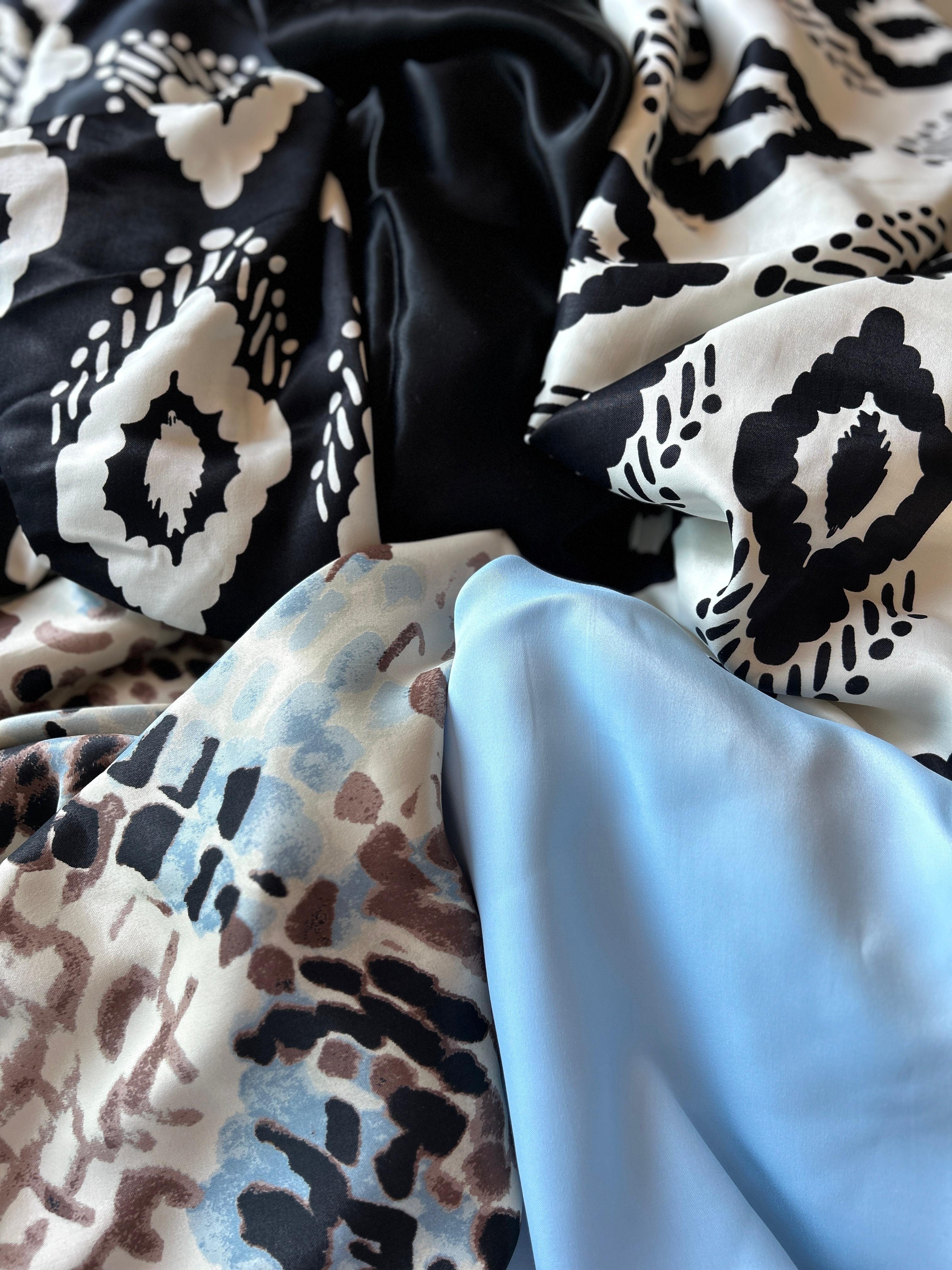
Satin fabric is a luxurious textile known for its shiny surface, soft touch, and flowing drape. It is made from fibers such as silk, polyester, viscose, or acetate. The unique weaving technique, where the warp threads are brought to the surface, gives satin its signature glossy finish and elegant texture.
Key Characteristics of Satin Fabric
Here are the features that make satin stand out from other fabrics:
- Glossy, smooth surface: Reflects light beautifully and creates a luxurious appearance.
- Fluid drape: Hangs gracefully and moves with the body, creating an elegant silhouette.
- Cool to the touch: Feels light and breathable, making it suitable for summer wear.
- Slippery texture: Requires careful handling, especially during cutting and sewing.
- Double-sided texture: Typically shiny on one side and matte on the reverse.
Satin in the Fashion World
Satin has been a staple in fashion for centuries. Today, it is used in both high-end designer collections and everyday chic outfits. Popular uses include:
Dresses & Eveningwear
Satin’s smooth drape makes it a favorite for evening gowns, cocktail dresses, and bridal wear. It hugs the body while adding fluidity and elegance.
Blouses & Shirts
Satin tops elevate any outfit with minimal effort, offering both comfort and sophistication.
Loungewear & Intimates
With its silky feel, satin is ideal for pajamas, robes, and lingerie. It's breathable and perfect for warmer weather.
Accessories & Details
Hairbands, scarves, and even bag linings often use satin for its eye-catching shine and soft texture.
Tips for Designing with Satin Fabric
- Cutting requires precision due to the slippery nature of satin.
- Use fine needles and matching threads to avoid snags or marks.
- Iron on the reverse side at low heat to maintain the fabric’s quality.
The Timeless Allure of Satin
Whether you’re designing formalwear or a statement blouse, satin adds a touch of glamour and refinement. Its timeless appeal and luxurious texture make it a go-to fabric for both designers and DIY creators.